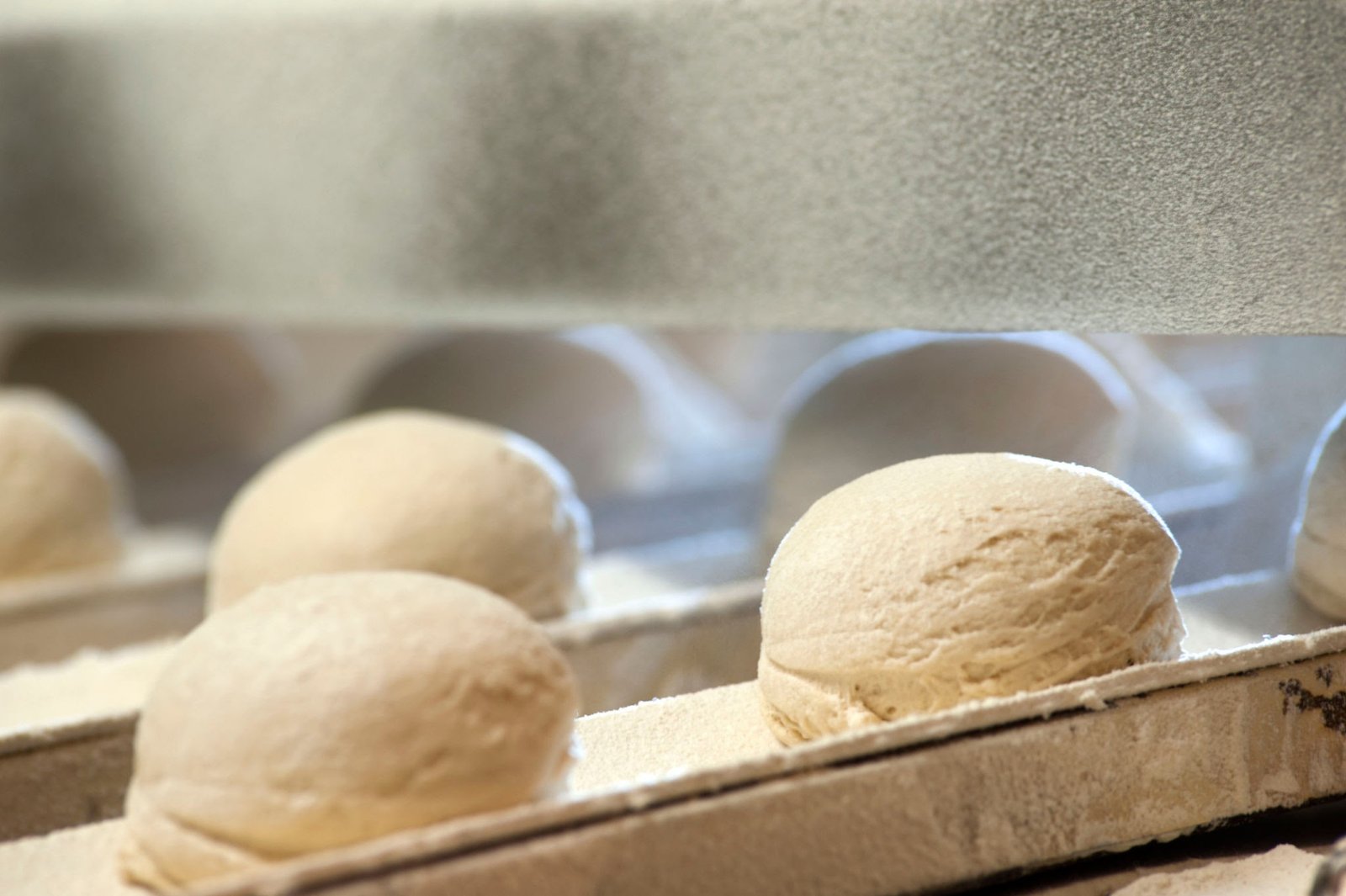
In commercial bakery and flatbread production, timing is everything. High-speed mixing lines generate heat and mechanical friction that can cause standard acidulants (such as fumaric or citric acid) and chemical leaveners to react too early in the dough stage.
Common Production Roadblocks
- Premature Carbon Dioxide Release: Standard chemical leavening agents react immediately upon contact with water, exhausting gas before the dough hits the oven.
- Gluten Network Disruption: Early acidification tightens or breaks down gluten chains, resulting in sticky dough that jams equipment.
- Shortened Mold-Free Shelf Life: Preservatives like calcium propionate can interfere with yeast activity if introduced unshielded.
The Engineered Solution: Temperature-Triggered Release
By using thermal-release microencapsulation, acids and leaveners remain locked inside a lipid shell during ambient proofing and mechanical kneading. Once the dough reaches target oven temperatures, the lipid wall melts, releasing the core ingredient at the precise moment required for optimal rise, structure, and crumb consistency.